

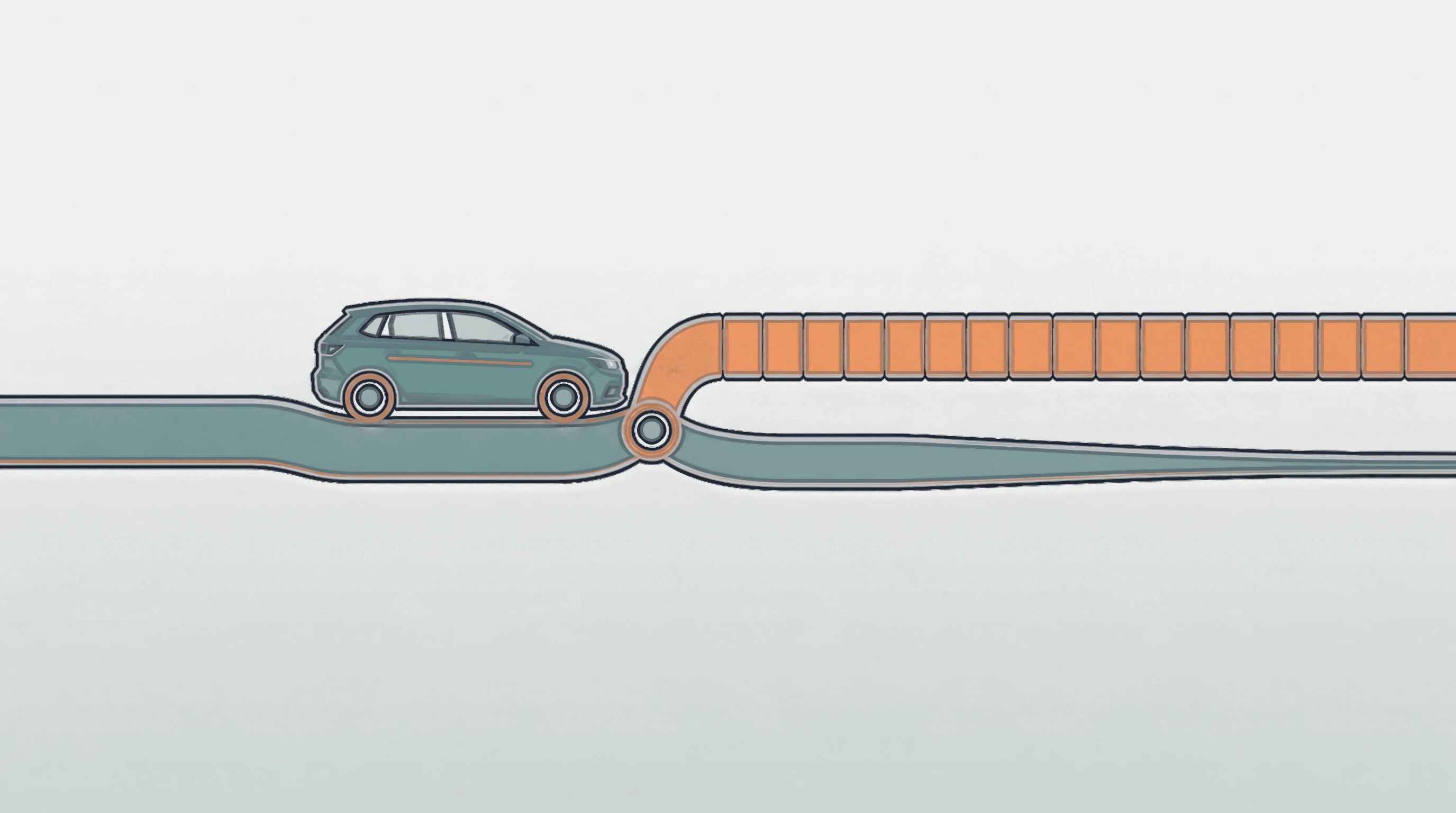
A car loan affects wealth through more than its monthly payment. Purchase price, amount financed, APR, term, fees, depreciation, and operating costs all matter. Opportunity-cost examples can help compare choices, but a projected investment return is not guaranteed.
A vehicle can support work, family, and daily life, so the goal is not to declare every car loan “bad.” The goal is to understand what a financing choice commits you to and how it competes with saving, investing, and other priorities.
This article is general U.S.-oriented financial education, not individualized financial, tax, or lending advice. Actual loan terms, insurance costs, taxes, vehicle reliability, and investment results vary.
Look beyond the monthly payment
A monthly payment can be made smaller by extending the loan. That does not make the vehicle less expensive. When comparing offers, review:
- vehicle price and down payment;
- trade-in value and any negative equity rolled into the new loan;
- amount financed;
- annual percentage rate (APR);
- finance charge and lender or dealer fees;
- number of payments and total of payments;
- prepayment terms;
- insurance, tax, registration, fuel, maintenance, and repairs.
The federal Truth in Lending disclosure identifies the APR, finance charge, amount financed, total of payments, and payment schedule. Use these figures to compare offers on a consistent basis. The Car Loan Calculator can model payment and interest, while the Car Affordability Calculator starts from a budget rather than a dealer’s target payment.
Why a longer term can be risky
A longer term often lowers the required payment but increases total interest. It can also keep the loan balance high while the vehicle depreciates. If the outstanding balance exceeds the vehicle’s value, selling or trading the car may require cash or rolling negative equity into another loan.
That cycle can make the next vehicle more expensive before its own purchase price is considered. A practical comparison therefore asks: How long will I keep this vehicle, and what is the expected balance when I might need to replace or sell it?
Calculate opportunity cost honestly
Suppose $500 is invested monthly for 20 years and earns a hypothetical 7% annual return, compounded monthly. The future value is about $260,000 before taxes and fees. That calculation is useful, but it is a scenario, not the guaranteed cost of owning a car.
The comparison must disclose that:
- market returns can be lower or negative, especially over shorter periods;
- investment fees and taxes can reduce the result;
- the driver still needs transportation;
- a cheaper vehicle has purchase and operating costs too;
- paying down debt provides a contractual reduction in interest, while investing provides an uncertain return.
Compare the lowest total transportation cost that reliably meets your needs with the amount you can consistently save after paying it. The choice is not simply a car versus a projected $260,000.
Compare financing with cash and prepayment
Paying cash avoids financing charges but reduces liquid savings. Financing preserves cash but adds a contractual payment and interest. Making extra principal payments can shorten the term, but only after confirming how the lender applies them and whether any prepayment restriction exists.
Before using a large down payment or payoff:
- Preserve an appropriate emergency reserve.
- Address higher-cost debt and essential insurance.
- Compare multiple loan offers, not only dealer financing.
- Ask whether a shorter term still fits the budget.
- Confirm the vehicle’s full ownership cost.
For tax years in which a federal vehicle-loan-interest deduction may be available, eligibility can depend on the loan date, vehicle, use, lien, final assembly, income, and other requirements. A potential deduction does not erase the interest cost; verify current IRS rules rather than assuming either eligibility or ineligibility.
A practical FIRE-oriented vehicle rule
Financial independence is helped by durable choices, not a universal command to buy the cheapest car. Reliability, safety, commute needs, accessibility, and repair risk matter. Consider this sequence:
- define the transportation requirement;
- set a total-cost ceiling with the Car Affordability Calculator;
- compare insurance quotes and likely maintenance;
- obtain several financing offers;
- choose the shortest affordable term without draining emergency savings;
- keep the vehicle long enough to avoid repeatedly paying transaction costs and early depreciation;
- redirect the payment to savings when the loan ends.
Example comparison
| Factor | Lower-cost structure | Higher-risk structure |
|---|---|---|
| Purchase decision | Based on total price and needs | Based only on target payment |
| Loan term | Shorter affordable term | Extended term to force payment lower |
| Equity | Down payment and balance monitored | Negative equity rolled repeatedly |
| Investing claim | Scenario with disclosed assumptions | Market return presented as guaranteed |
| Ownership plan | Reliability and years of use considered | Frequent replacement without total-cost review |
A car loan does not determine your financial future by itself. Repeatedly financing more vehicle than the budget supports, however, can reduce flexibility for years. Compare the entire transaction and make the tradeoff visible.
Sources
- CFPB: How to compare auto-loan offers
- CFPB: Truth in Lending disclosures for auto loans
- CFPB: Negative equity in auto lending
- Investor.gov: Introduction to investing and risk
- IRS: Current individual tax provisions
Sources reviewed July 29, 2026. Confirm current loan disclosures and tax rules for the specific transaction.
Frequently Asked Questions
Is the lowest monthly payment the best auto-loan offer?
Not necessarily. A longer term can reduce the monthly payment while increasing total interest and the period during which you may owe more than the vehicle is worth. Compare APR, amount financed, finance charge, term, fees, and total payments.
Should I invest instead of paying down a car loan?
Loan interest is contractual while investment returns are uncertain. Compare the loan cost with a risk-appropriate expected return, preserve emergency savings, and account for taxes, fees, and your time horizon.