

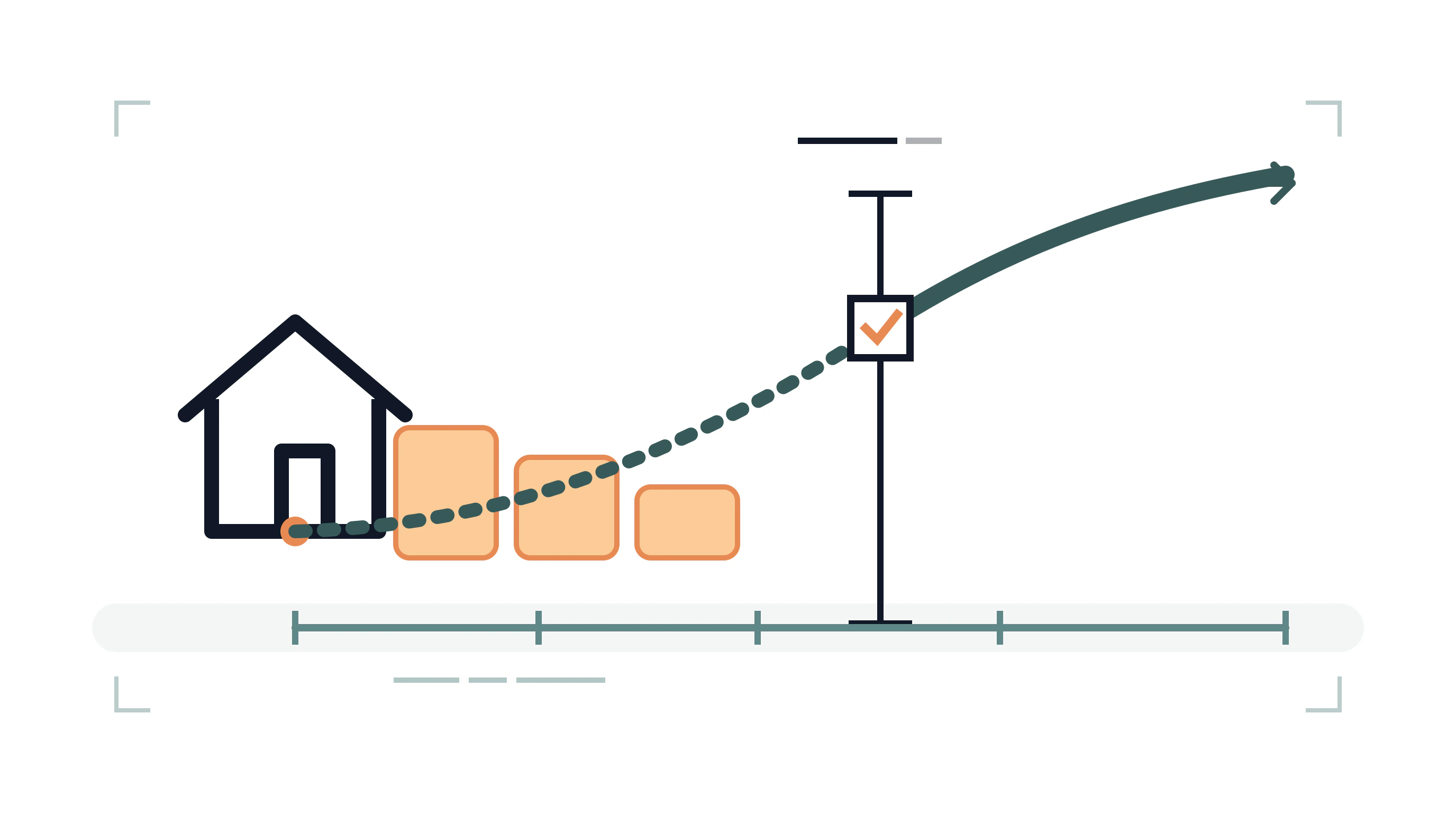
A refinance can lower the required payment without lowering the total cost of the loan. Estimate how long eligible upfront costs take to recover, then compare the current loan, the offered term, and a payoff plan that keeps your original horizon.
This is general U.S. financial education, not individualized mortgage, tax, legal, or investment advice. A lender’s Loan Estimate, closing disclosure, note, and your servicer’s terms control. Verify the numbers and ask a qualified professional about your situation.
Break-even is a time estimate, not a verdict
The simple refinance break-even equation is:
eligible refinance costs ÷ positive monthly payment reduction = estimated months to break even
For example, $6,000 of eligible costs divided by $400 of monthly savings gives 15 months. After that point, the simple arithmetic shows more payment savings than those costs if the payment difference stays the same and you keep the loan. It does not prove that refinancing is beneficial. It does not predict rates, future payments, home value, taxes, or whether you will sell or refinance again.
Firebasis’s Mortgage Refinance Calculator follows this narrow calculation: it uses closing costs divided by positive monthly savings and reports “Never” when the new payment is not lower. Treat the result as a screening estimate, not a recommendation. If cash-out raises the new balance, or if points and other charges are missing from the cost input, the displayed result can be incomplete.
Decide what belongs in the cost number
Do not start with a universal percentage or a generic online estimate. Build the cost input from the offer you are actually reviewing. Ask the lender to identify and explain items such as:
- lender or origination charges;
- discount points;
- appraisal, title, recording, and other third-party charges;
- lender credits, which may reduce some upfront charges but can come with a different rate or pricing;
- prepaid interest and initial escrow funding; and
- any cash-out amount, which increases the new loan rather than representing a cost by itself.
Separate true refinance costs from amounts that may be collected to fund an escrow account or pay interest between closing and the next payment. They still affect cash needed at closing, but combining every dollar can make two offers difficult to compare. The relevant question is what you are counting as the price of obtaining the new loan and what you are simply moving or pre-funding. Use the lender’s disclosures and ask questions rather than assuming every line has the same economic effect.
The calculator has one closing-cost input and a separate cash-out input. It cannot know whether your input includes points, prepaid items, escrow, credits, taxes, insurance, or every fee in the offer. Record the assumptions next to your result.
Why a lower payment can mislead
A new loan commonly starts a new amortization schedule. A 30-year refinance can lower the payment by spreading repayment over more months, even when you have already paid several years on the current loan. Compare more than the first monthly-payment difference:
- Keep the current loan. Record the remaining balance, required payment, months left, and remaining scheduled payments. This is the baseline, not a claim that you will never make extra payments.
- Refinance to the offered term. Compare the new payment and the new loan’s scheduled payments, adding eligible costs under a clearly stated convention. A lower payment can coexist with a longer payoff horizon.
- Refinance but preserve the old payoff horizon. If the offered term is longer, consider paying extra principal so the new balance is repaid over approximately the months that remained on the old loan. The payment required for that schedule may be higher than the advertised refinance payment, but it can reduce the term-reset effect. Confirm how extra payments are applied and whether the loan has any prepayment restrictions.
The Mortgage Payment Calculator can help isolate payment mechanics. The Mortgage Tools hub provides the related calculators. For a broader cash-flow and liquidity comparison, rather than a duplicate refinance analysis, see How to Balance Mortgage Payoff and Investing for Early Retirement.
Hypothetical worked example
The following is an invented illustration, not a current market quote or a forecast. It uses principal-and-interest calculations only; it excludes taxes, insurance, mortgage insurance, escrow changes, and any tax effect.
Assume a homeowner has a $300,000, 30-year loan at 7.5% and has made 60 payments. The remaining scheduled term is 25 years (300 months). A proposed refinance replaces the approximately $283,852 remaining balance with a 30-year loan at 6.0%, has $6,000 of eligible costs, and has no cash-out.
Using the standard amortization formula, the current payment is about $2,097.64 per month. The proposed 30-year payment is about $1,701.84, so the monthly reduction is $395.81. The simple break-even calculation is $6,000 ÷ $395.81 = 15.16 months, which rounds up to 16 months (1.3 years) for a whole-month screening result.
Now compare the horizon. Keeping the current loan would schedule about $629,293 in remaining payments. The new 30-year loan plus the $6,000 cost would schedule about $618,662 under this simplified comparison. That is not a guarantee of savings: it depends on the assumptions and counts the refinance cost as specified.
If the homeowner instead wants to repay the new balance over the old 25-year horizon, the principal-and-interest payment is about $1,828.86, or about $127.03 more than the new 30-year payment. This preserves the 25-year schedule in the illustration and changes the payment-savings calculation. The example shows why “lower payment” and “lower total cost” are different questions. Reproduce the arithmetic with your own balance, rates, terms, and cost definition before making a decision.
Check the holding period and loan terms
If you sell before the estimated break-even month, the simple payment savings may not recover the eligible costs. The same issue applies if you refinance again, because a new transaction can add new costs and reset the comparison. A break-even result is therefore meaningful only alongside a realistic estimate of how long you expect to keep this loan.
Ask whether the note or applicable state law permits a prepayment penalty. The Consumer Financial Protection Bureau’s explanation of prepayment penalties says a lender may charge one under some loan terms and that the loan documents should be checked. Do not assume that an early sale or payoff is cost-free.
Tax treatment is also not a universal adjustment to the equation. IRS Publication 936 describes the requirements and limitations that can affect whether home-mortgage interest is deductible; a deduction is not automatic for every borrower or every dollar. Do not subtract a marginal tax rate from the mortgage rate without checking current rules and your own tax circumstances.
A practical review checklist
Before relying on a result, save the loan offer and write down: current balance and remaining months; each rate and term; whether the new balance includes cash-out; the cost items included and excluded; credits and prepaid or escrow amounts; the payment used; and the month you expect to sell, refinance, or otherwise leave the loan. Then test a higher-cost version, a shorter holding period, and a payoff-horizon-preserving payment.
Use the refinance calculator as a first-pass comparison, not a promise of savings or an approval prediction. Compare the result with the lender’s disclosures and the terms that actually govern your loan.
Sources
- Consumer Financial Protection Bureau: Mortgages consumer tools: neutral mortgage decision and consumer-help context; accessed July 31, 2026.
- Consumer Financial Protection Bureau: What is a prepayment penalty?: bounded prepayment-penalty explanation; accessed July 31, 2026.
- Internal Revenue Service: Publication 936, Home Mortgage Interest Deduction: current publication consulted for tax caveats; accessed July 31, 2026.
Re-review this guide when calculator behavior, loan-cost conventions, CFPB guidance, or IRS Publication 936 changes.